Why I Stopped Taking Insurance, And Why It's Better for My Patients
I've been a physical therapist for over 35 years. For much of that time, I worked within the insurance system. I know how it works from the inside. And I made a deliberate choice to leave it. That decision is the best thing I've ever done for my patients. Here's the honest version of why.
What Insurance Actually Does to Physical Therapy
When a PT practice accepts insurance, the insurance company not the therapist, not the patient decides what care looks like.
How many visits you're approved for. How long each session lasts. What treatments are "medically necessary." Whether you need to come back for a progress note before more visits are authorized. Insurance companies employ people whose full-time job is to find reasons to approve fewer sessions and shorter visits.
The result is a system where the therapist is constantly fighting for their patient instead of treating them. And patients end up with watered-down care rationed by a spreadsheet.
I didn't go to school to let a claims adjuster override my clinical judgment.
The Volume Problem
Here's what insurance reimbursement actually requires: volume. To keep a practice financially viable under insurance rates, you need to see a lot of patients. Back-to-back. Overlapping schedules. Aides and assistants doing much of the hands-on work while the licensed PT supervises from across the room.
I've worked in those environments. You know what that looks like for the patient? You show up, someone hooks you up to a machine for 20 minutes, you do a few exercises, and the therapist checks in for 10 minutes before moving to the next patient.
That's not physical therapy. That's a factory.
One-on-one, hands-on care with the same therapist every single visit is genuinely rare in this industry. It shouldn't be but under the insurance model, it's nearly impossible to sustain.
What Cash-Pay Made Possible
When I stopped billing insurance, something shifted immediately.
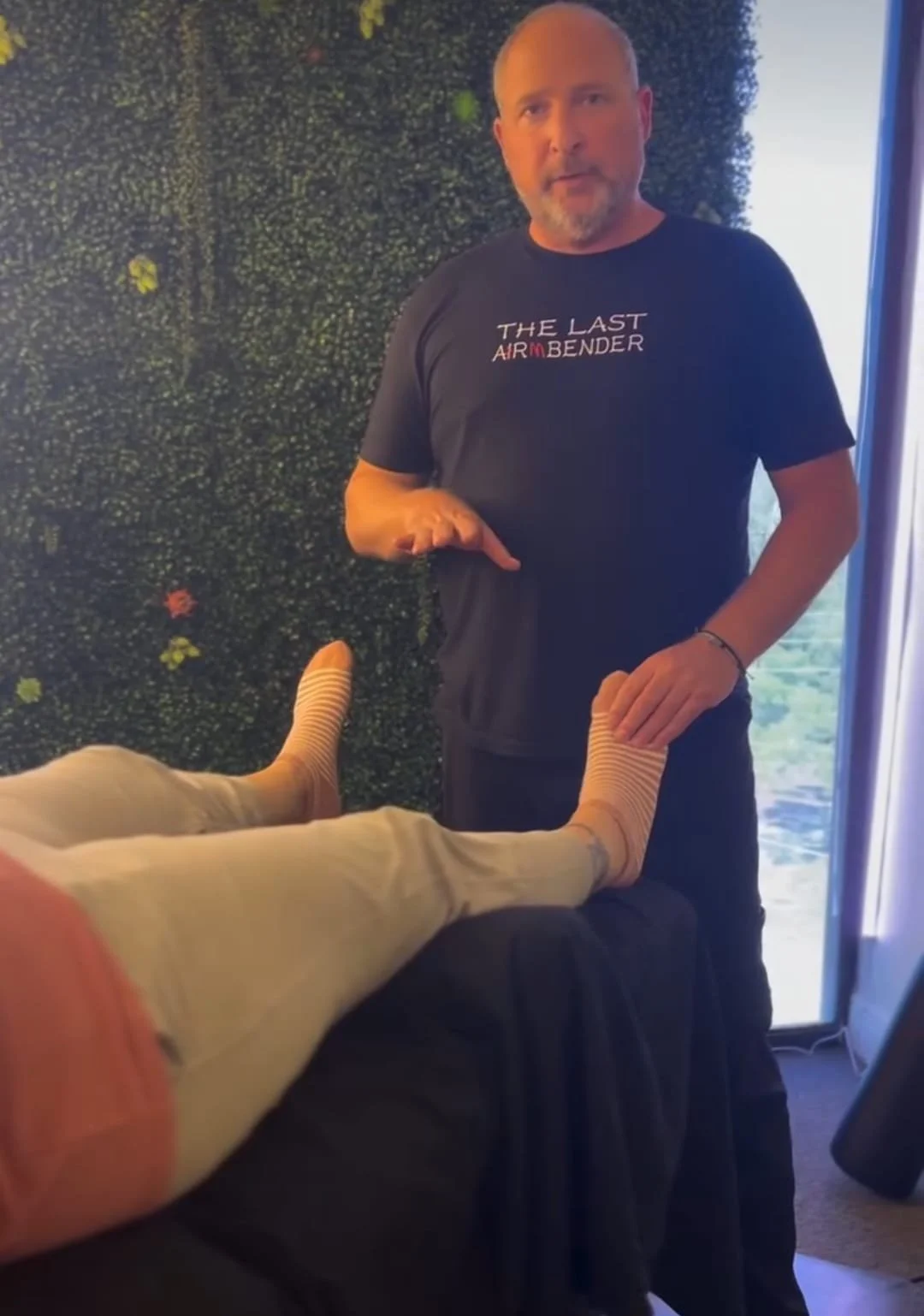
I could spend a full hour with each patient. I could do the hands-on manual therapy that actually moves the needle, without watching the clock and calculating billable units. I could treat the whole person not just the diagnosis code on the referral form.
I could also be honest with patients about their prognosis. In an insurance-based practice, there's a financial incentive to keep patients coming back. More visits, more billing. In a cash-pay model, my incentive is the opposite: get you better as fast as possible, because that's what earns referrals and trust.
That's why I can make a promise I stand behind: most patients see results in 3 visits or less. That's not a marketing line. It's what happens when care is efficient, focused, and not diluted by the demands of insurance billing.
What About the Cost?
I hear this concern often, and it's a fair one.
Cash-pay PT is not inexpensive. A session with me costs more per visit than your insurance copay. That's true.
But here's what people miss when they compare those numbers:
Copays are not the real cost of insurance-based PT. The real cost includes the deductible you hit first, the coinsurance after that, the 2–3 visits per week for 6–8 weeks that the system pushes you toward, the time off work, the gas, the co-pays stacking up. When you add it all together, a lot of patients end up spending more , and recovering more slowly than if they'd come to a cash-pay clinic for 3 targeted sessions.
There's also the cost of waiting. Prior authorizations take time. Getting a referral takes time. Scheduling at a busy insurance-based clinic takes time. Pain doesn't wait.
HSA and FSA funds are eligible for physical therapy. If you have a health savings account, you can use it here. That changes the math significantly for most patients.
Who This Model Serves and Who It Doesn't
I want to be straightforward about this. Cash-pay PT is not for everyone.
If you have a complex, long-term condition requiring months of ongoing care and your insurance covers it well, you should use your insurance. That's what it's there for.
But for the majority of people who come to me back pain that flared up, a shoulder that's been nagging for weeks, a knee that's not right after a fall, plantar fasciitis that's been slowing down your morning runs, 3 focused sessions of real manual therapy will do more than 12 insurance-rationed visits stretched over two months.
If you've been to PT before and felt like you weren't getting anywhere, this is usually why.
The Model I Believe In
Concierge Physical Therapy exists because I wanted to practice the way I was trained, and the way I'd want to be treated as a patient.
Same therapist every visit. Full session of hands-on care. No aides, no machines as a substitute for treatment, no scheduling 4 people at the same time. You get me, the whole time, every time.
That's what "concierge" means. Not luxury. Just the standard of care every patient deserves.
If you've been putting off PT because of the hassle, the cost uncertainty, or a bad experience in the past, I'd invite you to try something different.
(727) 292-1922
We see patients in Largo (Mon–Fri 9am–6pm, Sat 9am–1pm) and St. Petersburg (Wednesdays 10am–1pm).